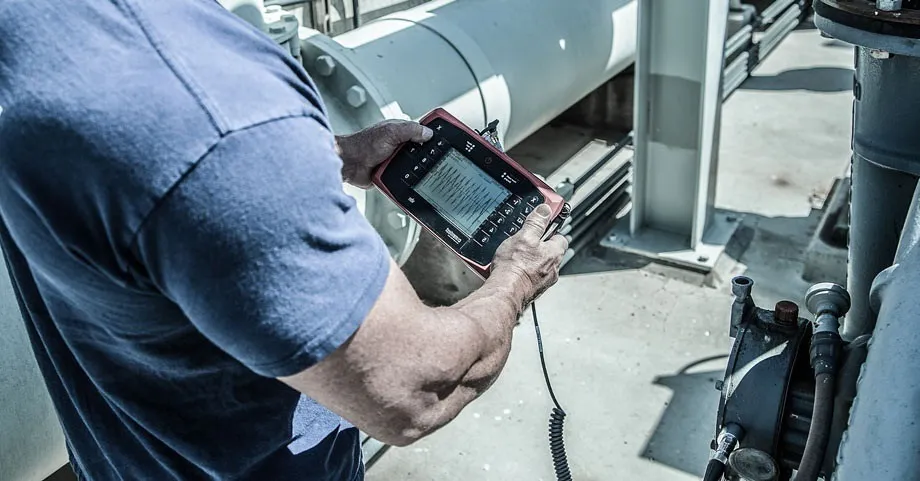
VIBRATION ANALYSIS
Vibration Analysis for
Industrial Reliability
Diagnose vibration characteristics at the source to prevent failures, extend equipment life, and maintain safe operation.
Address Downtime Proactively.
Excessive vibration is a silent enemy. From premature bearing failures in rotating equipment to sensitive electronics shutting down, vibration shortens equipment lifespan, increases unscheduled downtime, and creates safety risks.
Our vibration analysis services provide comprehensive data and solutions specific to address your vibration concerns. We identify vibrational sources, quantify severity, and design effective mitigation strategies that restore performance, protect employees, and improve reliability.
Ignoring vibration leads to more than equipment reliability and maintenance problems. OSHA, ISO 2631, and ANSI S2 standards establish limits on allowable worker exposure to vibration. Exceeding those limits risks regulatory penalties and long-term injury.
Our vibration analysis services provide comprehensive data and solutions specific to address your vibration concerns. We identify vibrational sources, quantify severity, and design effective mitigation strategies that restore performance, protect employees, and improve reliability.
Ignoring vibration leads to more than equipment reliability and maintenance problems. OSHA, ISO 2631, and ANSI S2 standards establish limits on allowable worker exposure to vibration. Exceeding those limits risks regulatory penalties and long-term injury.
Several benefits of vibration monitoring programs:
- Protect Structural Integrity
Prevent cracking, loosening, and fatigue in building structures, supports, and foundations. - Safety
Limits worker exposure to hand-arm and whole-body vibration. - Reliability
Reduces catastrophic equipment failures. - Cost
Extends service life of bearings, motors, and foundations.
Common Challenges We Solve.

Rotating Equipment Failures
Premature bearing and shaft damage in fans, pumps, and compressors caused by bearing wear, misalignment and imbalance.

Heavy Machinery
Stamping presses, broaches and forging hammers transmitting vibration through foundations.

Data Center Downtime
Seismic vibration disrupting or damaging servers and sensitive electronics.

Healthcare & Lab Interference
MRI and imaging equipment compromised by building vibration.

HVAC-Induced Disruption
Chillers and rooftop units causing high levels of vibration in occupied office or tenant areas.

Production Line Defects
Production quality or part tolerance concerns in machining systems, precision measuring equipment, and sensitive production processes, caused by excessive vibration.
VIBRATION ANALYSIS
Our Approach
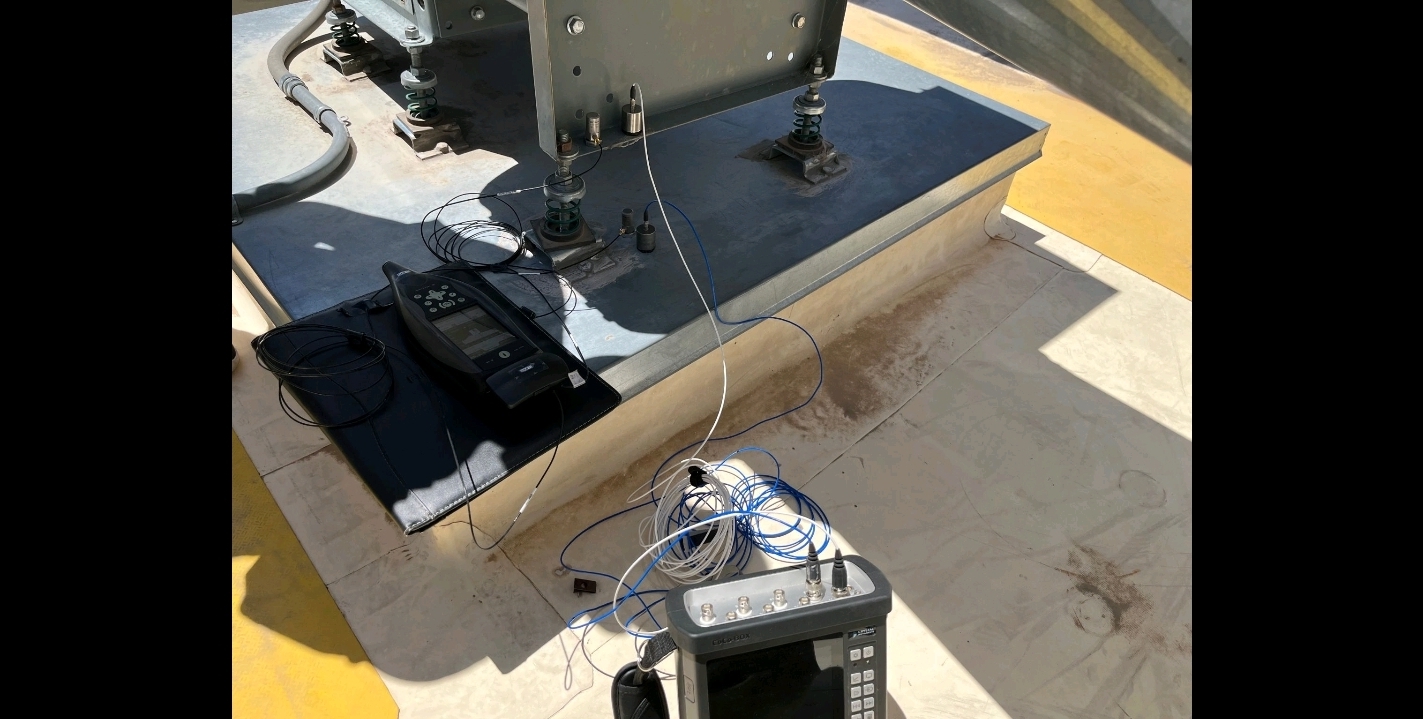
Memtech utilizes state-of-the-art vibration instrumentation and analysis methods to evaluate mechanical and structural behavior under real operating conditions. Measurements are reviewed against ISO, ANSI, and OSHA vibration standards to determine whether the issue stems from imbalance, misalignment, resonance, or poor isolation.
Our engineers apply predictive modeling and simulation tools to understand system dynamics and forecast how different vibration mitigation strategies will perform. This step allows us to define the most effective combination of isolation, damping, and structural improvements before implementation.
Memtech also provides complete project support, from design recommendations and technical oversight to contractor coordination and post-mitigation validation testing.
This integrated approach ensures that vibration levels are controlled within allowable limits, assuring optimum equipment reliability. For issues where ergonomic (human) vibration exposure is of concern, wecan implement real-time monitors at the machine/human interface to warn whenvibration levels become excessive
Our engineers apply predictive modeling and simulation tools to understand system dynamics and forecast how different vibration mitigation strategies will perform. This step allows us to define the most effective combination of isolation, damping, and structural improvements before implementation.
Memtech also provides complete project support, from design recommendations and technical oversight to contractor coordination and post-mitigation validation testing.
This integrated approach ensures that vibration levels are controlled within allowable limits, assuring optimum equipment reliability. For issues where ergonomic (human) vibration exposure is of concern, wecan implement real-time monitors at the machine/human interface to warn whenvibration levels become excessive
VIBRATION ANALYSIS
Machine Signature Analysis
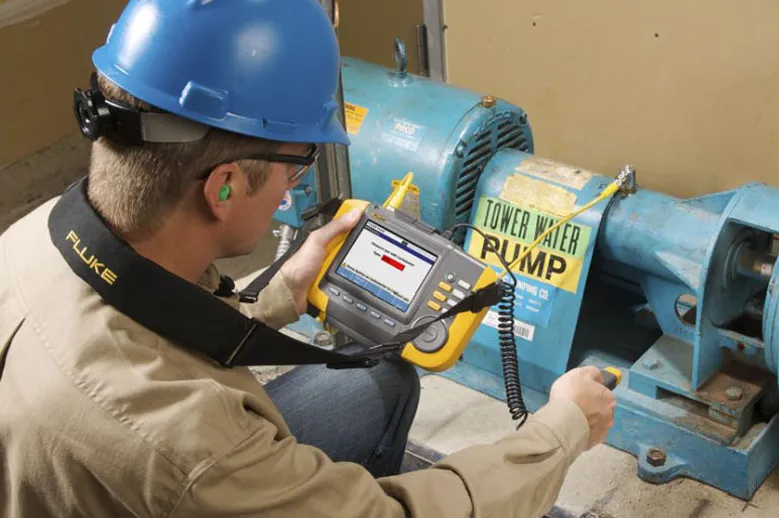
Vibration "signatures" from equipment can readily indicate a variety of problems, including wear, inadequate lubrication, misalignment and many other issues. Several techniques are now available to automate the process of vibration data acquisition and analysis, reducing the complexities of identifying and categorizing ever-changing vibration characteristics.
Rather than utilizing skilled trades to manually gather vibration data using handheld probes and data collectors, and trying to decipher the results, advanced processing algorithms allow a more repeatable and reliable method of monitoring equipment.
MEMTECH can assist in establishing a vibration monitoring program in your plant, to meet your uptime and maintenance requirements. We can also train plant personnel in the use of this equipment, to better integrate the resulting data with your maintenance departments. This enables critical maintenance activities to evolve from "panic" to "planned".
Rather than utilizing skilled trades to manually gather vibration data using handheld probes and data collectors, and trying to decipher the results, advanced processing algorithms allow a more repeatable and reliable method of monitoring equipment.
MEMTECH can assist in establishing a vibration monitoring program in your plant, to meet your uptime and maintenance requirements. We can also train plant personnel in the use of this equipment, to better integrate the resulting data with your maintenance departments. This enables critical maintenance activities to evolve from "panic" to "planned".
VIBRATION ANALYSIS
Reducing Vibration
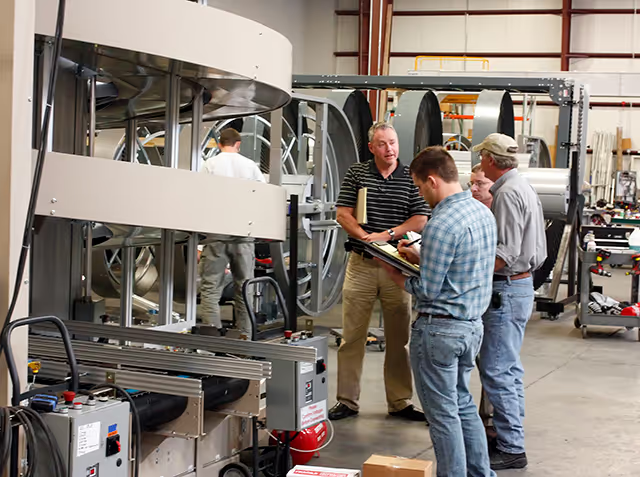
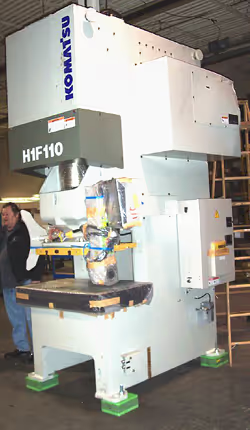
When vibration problems are inherent in the operation of equipment (such as with presses, broaches, etc.), we offer a variety of solutions to reduce the effects of this vibration on adjoining equipment.
Equipment which is hard-mounted to concrete foundations can not only result in vibration being "coupled" to adjoining machinery, it can also result in very high noise levels.
Vibrational energy which falls into the audible range of frequencies is "reflected" from high-mass foundations and supporting structures, resulting in excessive sound levels.
Well-designed machine-base absorbers (which are designed to support considerable weight without deforming or deteriorating) can be strategically placed between a machine base and foundation, and will have a significant impact on radiated noise as well as improving machine reliability.
Isolating machinery from foundations and support can be achieved using engineered absorption supports.
Products such as AirLoc’s isolation pads and inertia-base products are designed to absorb high-impact energy, as well as vibration due to inherently imbalanced rotating equipment (i.e. crankshaft broaches) or other high-vibration equipment.
Equipment which is hard-mounted to concrete foundations can not only result in vibration being "coupled" to adjoining machinery, it can also result in very high noise levels.
Vibrational energy which falls into the audible range of frequencies is "reflected" from high-mass foundations and supporting structures, resulting in excessive sound levels.
Well-designed machine-base absorbers (which are designed to support considerable weight without deforming or deteriorating) can be strategically placed between a machine base and foundation, and will have a significant impact on radiated noise as well as improving machine reliability.
Isolating machinery from foundations and support can be achieved using engineered absorption supports.
Products such as AirLoc’s isolation pads and inertia-base products are designed to absorb high-impact energy, as well as vibration due to inherently imbalanced rotating equipment (i.e. crankshaft broaches) or other high-vibration equipment.
VIBRATION ANALYSIS
Building Structural Analysis
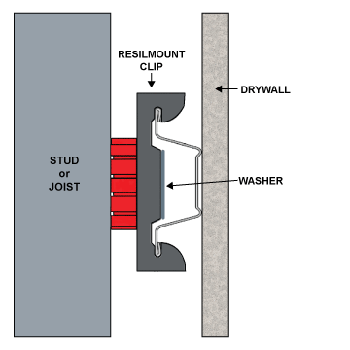
For commercial or construction settings where structure-borne vibration is a challenge. Solutions such as Resilmount’s structural support products and isolation clips are used to decouple building sub-assemblies and reduce the transmission of vibration or sound.
In designing solutions to vibration problems, we simulate input energy and response characteristics using tools like Finite Element Modeling (FEA) or Statistical Energy Analysis (SEA). Combined with modal analysis to quantify a system’s resonant characteristics, this integrated modeling approach allows us to define critical parameters such as system natural frequency, isolation effectiveness, damping ratio, and thus determine the required isolation specifications.
It is also critical that machine performance and part quality capabilities remain a prime consideration in the analysis.
In designing solutions to vibration problems, we simulate input energy and response characteristics using tools like Finite Element Modeling (FEA) or Statistical Energy Analysis (SEA). Combined with modal analysis to quantify a system’s resonant characteristics, this integrated modeling approach allows us to define critical parameters such as system natural frequency, isolation effectiveness, damping ratio, and thus determine the required isolation specifications.
It is also critical that machine performance and part quality capabilities remain a prime consideration in the analysis.
This specification process results in a well-defined approach toward an engineered solution, which may include:
- Isolation pads or mounts tailored to load and frequency content
- Tuned mass dampers or inertia bases
- Resilient supports or hangers
- Modifications or retrofits to stiffen structures or shift resonant frequencies
Finally, after procurement and installation support, we perform post-installation validation to confirm that specified vibration levels have been achieved and that the solution meets the performance criteria initially identified.

Vibration Control Products & Solutions
Every application demands a well-engineered solution. Memtech specifies and integrates high-performance vibration control systems from trusted manufacturers to achieve reliable, measurable results across industrial and commercial environments.
AirLoc Isolation Systems
Engineered mounts and pads that minimize transmitted vibration, reduce noise, and extend equipment life.
Advantages: Reliable performance, adjustable leveling, durable elastomeric or spring construction.
Advantages: Reliable performance, adjustable leveling, durable elastomeric or spring construction.
Resilmount Structural Isolation
Isolation clips and mounts decouple walls, ceilings, and floors to control vibration and improve acoustic ratings.
Advantages: Reduces low-frequency noise and vibration transfer, and integrates easily with standard framing.
Advantages: Reduces low-frequency noise and vibration transfer, and integrates easily with standard framing.
Spring & Elastomeric Mounts
Tailored for specific loads and frequencies to prevent vibration transfer through slabs or support structures.
Advantages: Adjustable for optimum damping, compact design, long-term durability.
Advantages: Adjustable for optimum damping, compact design, long-term durability.
Tuned Mass Dampers (TMDs)
Counteracts specific vibration frequencies in equipment, piping, or platforms.
Advantages: Reduces resonant effects, compact form-factor, minimal maintenance.
Advantages: Reduces resonant effects, compact form-factor, minimal maintenance.
Inertia Bases & Foundations
Adds system mass to lower natural frequencies and isolate high-energy sources.
Advantages: Limits structure-borne vibration, reduces noise, enhances reliability.
Advantages: Limits structure-borne vibration, reduces noise, enhances reliability.
Custom System Integration
Hybrid solutions blending enclosures, barriers, and absorption for complex environments.
These components are strategically selected to ensure optimal performance.
VIBRATION ANALYSIS
Low Noise Design Support
Processing equipment such as machine tools, pumps, compressors, HVAC systems, etc. are often designed without a great deal of consideration for minimizing noise within the machine itself.
Reducing noise at the source is almost always preferable to the use of enclosures or baffles, since these types of "external" noise-control structures can cause issues with maintenance access, excessive heat build-up and other issues, and can add significant cost.
Since noise is always caused by vibration, any design improvements that reduce vibration within a machine will almost always reduce the radiated noise levels. And since it requires energy to induce vibration, any engineered solutions to minimize vibration levels will often result in a more efficient and quieter machine.
Reducing noise at the source is almost always preferable to the use of enclosures or baffles, since these types of "external" noise-control structures can cause issues with maintenance access, excessive heat build-up and other issues, and can add significant cost.
Since noise is always caused by vibration, any design improvements that reduce vibration within a machine will almost always reduce the radiated noise levels. And since it requires energy to induce vibration, any engineered solutions to minimize vibration levels will often result in a more efficient and quieter machine.
These benefits can include:
- Reduced energy consumption
- Longer equipment life
- Increased reliability
- Improved life-cycle costs
- Better part quality (elimination of chatter or other vibration-related quality issues)

VIBRATION ANALYSIS
Our Capabilities
Memtech has worked with numerous equipment OEMs as well as with end-users to improve equipment design such that vibration and noise levels are significantly reduced while still meeting the desired cost targets and production goals.
We use empirical methods to gather and analyze data on existing equipment, determine static and dynamic stiffness levels, and model different solutions using advanced CAE software as well as finite element and SEA (Statistical Energy Analysis) simulations.
For machines which are still in the design process, we can offer engineering support services to assist designers in minimizing noise and vibration levels through the use of computer simulations and experience-based recommendations.
We use empirical methods to gather and analyze data on existing equipment, determine static and dynamic stiffness levels, and model different solutions using advanced CAE software as well as finite element and SEA (Statistical Energy Analysis) simulations.
For machines which are still in the design process, we can offer engineering support services to assist designers in minimizing noise and vibration levels through the use of computer simulations and experience-based recommendations.
Design enhancements can include:
- Structural stiffening of machine frames or tanks
- Mechanical isolation of high-vibration components
- Balancing or aligning rotating equipment
- Improving laminar flow through ducts or pipes
- Damping resonant modes in large structures
- Use of low-noise drive belts and sheaves
- Installing appropriate isolation mounting pads
- Speed and feed adjustments to avoid operation at resonant points
- Optimizing the design of tooling and part clamping systems
Lead Time &
Project Delivery
Every system is custom-designed and built-to-order, ensuring performance and compliance.
- Assessment
Vibro-acoustic analysis and engineering design. - Design & Fabrication
Systems built to spec using proven materials and methods. - Installation
Turnkey or partnered installation services. - Commissioning
Onsite validation to confirm system performance. - Timeline
Typical projects range from 4–12 weeks depending on complexity.

The Memtech Difference
At Memtech, noise is our business. Our engineers oversee every step, ensuring that each project is properly delivered, on-time and within budget. This integrated approach delivers predictable results and protects your investment.

Certified and Licensed Professionals
Testing conducted by certified engineers and acoustic specialists, not general contractors or “safety consultants.”

National Standards Alignment
We follow OSHA 1910.95, NIOSH criteria, and ANSI S12.19-1996 methods for noise exposure assessment. Measurements are conducted via ISO procedures or per academically accepted methods.

Engineering Expertise
Noise measurements, analysis, modeling and installation support are overseen by professionals who understand acoustic theory, as well as the implementation of practical solutions.
High Responsiveness, Proven Reliability
We are your trusted local partner providing on-demand support and dependable project execution. Michigan-based with regional reach and national* shipping capabilities.

Confidential & Detailed Reporting
We don’t just submit a report. You are provided with complete documentation, delivered in easy-to-understand language with accurate data and comprehensive drawings.
*Shipping available across the continental USA, and international; installations are offered in select regions.
NOTE: We do not stock custom products in our U.S. warehouse. Ask us about lead times for your project.
NOTE: We do not stock custom products in our U.S. warehouse. Ask us about lead times for your project.
Frequently Asked Questions (FAQs)
How do you measure vibration in industrial settings?
We use a variety of instrumentation that is suited for calibrated and traceable vibration and frequency-response measurements in virtually any environment.
What standards do you reference for compliance?
ISO 10816 for machinery vibration, ISO 2631 for human exposure, ANSI S2 standards, and OSHA requirements for vibration-related worker safety.
Can you retrofit solutions into an existing facility?
Yes. We frequently design retrofit isolation systems for equipment already in service while minimizing downtime.
What types of solutions do you implement?
Spring isolators, inertia bases, tuned mass dampers, resilient mounts, among others.
How long do systems last?
Depending on the design and materials, vibration control systems typically deliver 20–40+ years of performance with minimal maintenance.
Let’s Engineer the Right Solution, Together.

Let's Get Started. Contact Us.
Talk to our experts. We’ll assess your needs and recommend a solution that works for your project.