Training & Technical support
Empowering Teams
Through Effective Learning.
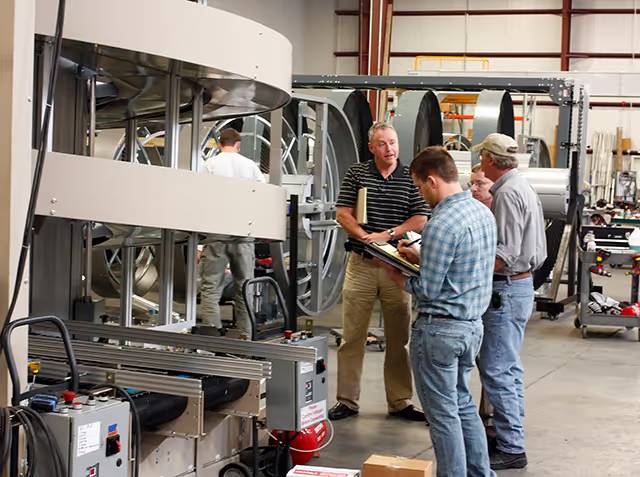
We specialize in comprehensive classroom and on-site training for engineers, skilled trades, technical personnel and management.
Noise Training & Coaching
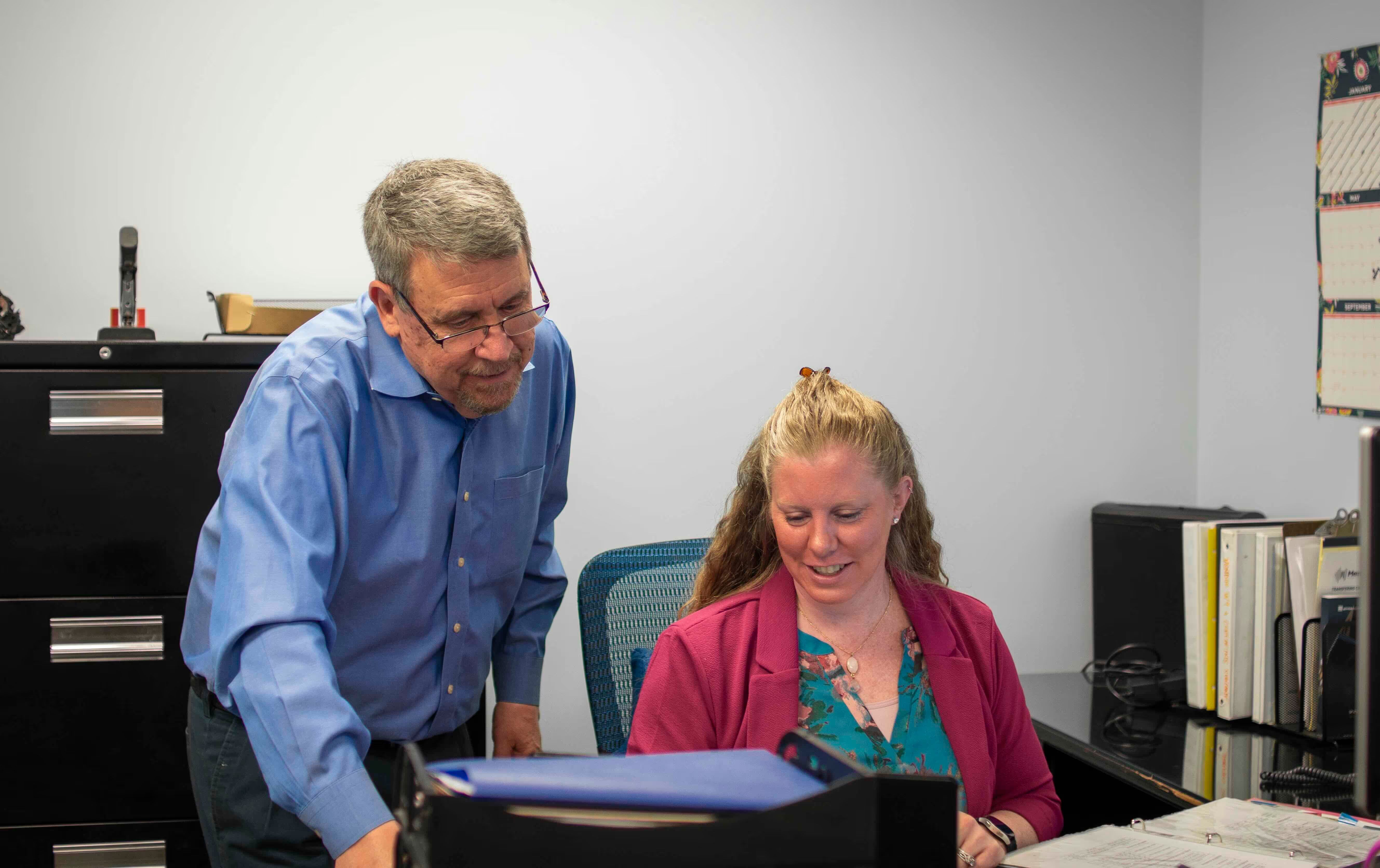
Memtech Acoustics offers a wide variety of training classes for engineers, skilled tradespeople, technicians or managers who are involved intaking noise or vibration readings, performing noise surveys, or in solving noise and vibration problems.
These classes can be held at your facility, at our office in Rochester Hills, Michigan, or at an offsite venue of your choosing. Our Six Sigma Black Belt Certified staff have extensive experience in acoustic measurements, noise and vibration analysis and signal processing.
We also have licensed professional engineers who can provide exceptional training in the fields of legal noise compliance and advanced acoustics. Our classes are highly “hands-on” and interactive. We can also assist in making measurements and performing analysis in your plant or office areas.
We are more than happy to tailor our classes to meet the needs of your specific facility and/or requirements.
These classes can be held at your facility, at our office in Rochester Hills, Michigan, or at an offsite venue of your choosing. Our Six Sigma Black Belt Certified staff have extensive experience in acoustic measurements, noise and vibration analysis and signal processing.
We also have licensed professional engineers who can provide exceptional training in the fields of legal noise compliance and advanced acoustics. Our classes are highly “hands-on” and interactive. We can also assist in making measurements and performing analysis in your plant or office areas.
We are more than happy to tailor our classes to meet the needs of your specific facility and/or requirements.
Topics include:
- Basic Noise Measurements
- Hearing Loss Mitigation and Noise Control Management
- Advanced Noise Measurements (NM 103)
- Basic Vibration Measurements
- Structural Vibration and Applications
- Comprehensive Noise and Vibration Measurement, Correlation and Analysis
- Understanding Machine Vibration Diagnostics
- Predictive Maintenance Systems
- Data Acquisition, Analysis and Problem Solving
Each session includes real-world case studies, interactive demonstrations, and Q&A opportunities with Memtech’s acoustic engineers.
Our Approach & Capabilities
Our classes offer a very pragmatic and applied approach toward problem-solving, rather than delving into extensive mathematical and statistical derivations. This will empower participants to focus on the practical execution of test planning, analysis and hypothesis-based solution methods when tackling difficult problems.
Our capabilities include:
Instructor-Led Training Programs
Our in-person and virtual sessions are led by engineers who bring real project experience to the classroom. Each program combines theory with hands-on demonstration, ensuring participants leave with both understanding and confidence.
Customized Corporate & Industry Workshops
From manufacturing plants to architectural projects, we adapt our training to the realities of your business. Programs can focus on regulatory compliance, material selection, field measurement, or mitigation strategies relevant to your facility or projects.
Equipment Operation & Calibration Techniques
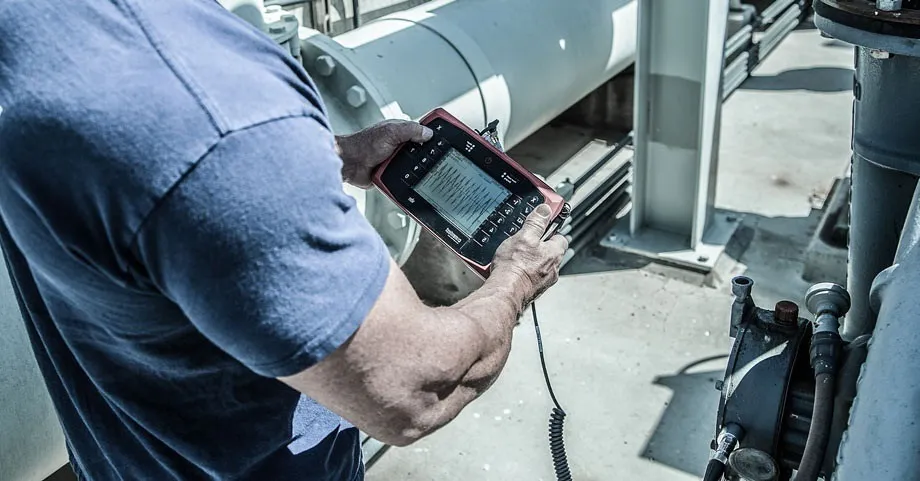
We teach proper use of acoustic and vibration instrumentation and analyzers, including setup, data logging, calibration, analysis and reporting.
Online Workshops & Virtual Learning
Our live online sessions allow teams anywhere to learn the fundamentals of acoustics, noise measurement, and noise control strategies. Each session includes Q&A, digital resources, and interactive demonstrations appropriate for web-based training.
Technical Documentation & Field Procedures
Participants receive practical documentation, including sample field forms, calibration checklists, and data interpretation sheets.
Custom Training for Management, Safety & Maintenance Teams
We help managers, maintenance staff, and safety personnel recognize high-risk areas, understand legal requirements, and implement effective noise control measures.
.jpeg)
TRAINING & TECHNICAL SUPPORT
Basic Noise Measurements (NM 101)
This is a one-day class for hourly engineers, hourly employees and managers. It provides a basic introduction to acoustics and the use of a sound level meter. Participants are encouraged to bring a sound level meter that they will be using for measurements, or Memtech can supply a meter if necessary.
Students will be instructed in making accurate sound measurements in both indoor and outdoor situations, including verifying OSHA compliance, as well as identifying noise sources and quantifying hearing-loss concerns.
Students will be instructed in making accurate sound measurements in both indoor and outdoor situations, including verifying OSHA compliance, as well as identifying noise sources and quantifying hearing-loss concerns.
The material includes:
- The Basics of Acoustics
- Introduction to Sound Level Meters
- Calibration
- Noise Standards and Criteria
- Identification of Noise Sources
- Common Pitfalls in Making Noise Measurements
- Noise Annoyance Issues
- Reporting Data
TRAINING & TECHNICAL SUPPORT
Hearing Loss Mitigation and Noise Control Management (NM102)
This one-day class provides a strong background for managers, health and safety personnel, and engineers involved in the implementation and oversight of noise control programs in plants and commercial facilities.
Issues relating to OSHA and/or NIOSH mandates for employee noise exposure are covered in-depth, along with reporting and documentation requirements. Concerns with environmental (neighborhood) noise compliance, including city and state noise codes are also included.
Issues relating to OSHA and/or NIOSH mandates for employee noise exposure are covered in-depth, along with reporting and documentation requirements. Concerns with environmental (neighborhood) noise compliance, including city and state noise codes are also included.
Topics covered include:
- The Basics of Acoustics
- Employee Noise Exposure Legal Requirements and Criteria
- Noise Compliance Measurements
- OSHA Reporting Requirements
- Noise Control/Reduction Methods
- Establishing a Noise Control Program in Plants and Commercial Operations
- Environmental Noise Issues
- Compliance with City and State Noise Codes
- Environmental Noise Control Methods

TRAINING & TECHNICAL SUPPORT
Advanced Noise Measurements (NM103)
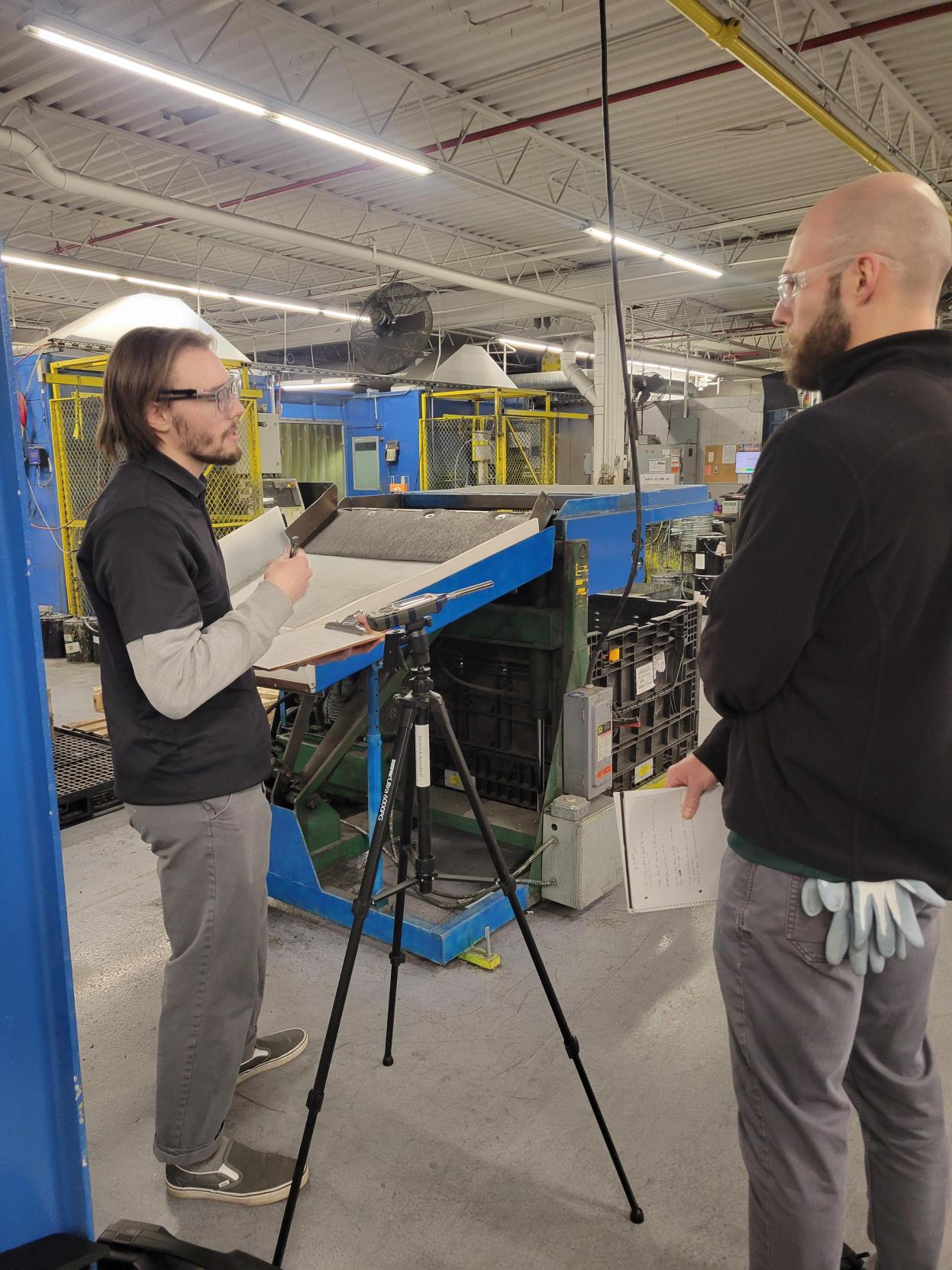
This is a one-day class for hourly engineers, hourly employees and managers who already have a good understanding of basic noise theory and measurements.
It is intended to augment skillsets to include advanced techniques in both time and frequency-domain measurements and analysis, and a foundation in data analysis and problem solving
It is intended to augment skillsets to include advanced techniques in both time and frequency-domain measurements and analysis, and a foundation in data analysis and problem solving
The material includes:
- Near and Far Field Measurements
- Octave Band and FFT Analysis
- Transfer Functions
- Measuring Sound Transmission Loss
- Advanced Environmental Noise Measurements
- Statistical Methods of Noise Analysis
- Time-Domain Analysis
- Quantifying Noise Reflections and Reverberation
TRAINING & TECHNICAL SUPPORT
Comprehensive Noise & Vibration Measurement and Analysis (NM104)
This week-long class is intended for engineers or advanced skilled trades who wish to become highly proficient in both noise measurements and basic noise-related problem solving.
It is a highly “hands-on” course which allows the participants to take readings and recommend cost-effective solutions in a variety of situations. This class requires the use of both a sound level meter and a 2- channel signal analyzer. Students are encouraged to bring their own equipment, or we can provide them for the class.
It is a highly “hands-on” course which allows the participants to take readings and recommend cost-effective solutions in a variety of situations. This class requires the use of both a sound level meter and a 2- channel signal analyzer. Students are encouraged to bring their own equipment, or we can provide them for the class.
It includes all the material covered in NM101 and NM102, plus:
- Intermediate Acoustic Theory
- Types of Microphones and Applications
- Noise Control Materials and Their Applications
- Reverberation Control in Rooms and Auditoriums
- Noise Control in Manufacturing Facilities
- NVH Measurements for Product Engineering
- Basic Vibration Measurements
- Environmental Noise Control
- Multi-Channel Analysis Methods (Cross-Spectrum, Advanced Transfer Functions and Coherence)
- Sound Power Measurements
NOTE: This class can be truncated to a 3-day length if the participants have a strong background in noise measurement, and/or have already taken NM101 and NM102.
TRAINING & TECHNICAL SUPPORT
Basic Vibration Measurements (NM105)
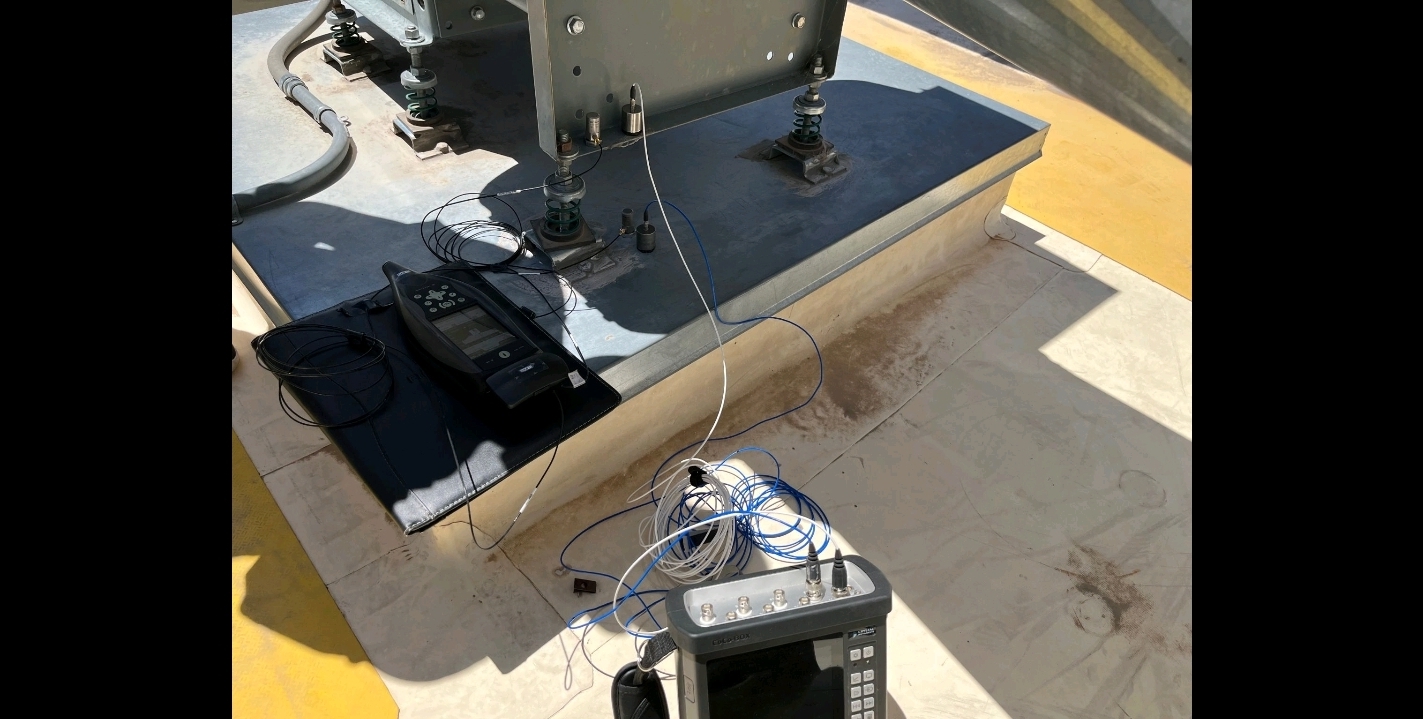
This is a two-day class for engineers, hourly employees and managers. It provides a general introduction to making accurate vibration measurements on manufacturing equipment.
Participants are encouraged to bring an analyzer or data collector that they will be using for measurements, or we can supply the needed equipment if necessary.
Students will be instructed in making accurate vibration measurements in a variety of situations, including assuring compliance with equipment vibrations standards, using vibration as a predictive maintenance tool and in understanding the effects of vibration on noise levels. In addition, issues such as vibration-induced machine failures or part quality concerns will be covered.
Participants are encouraged to bring an analyzer or data collector that they will be using for measurements, or we can supply the needed equipment if necessary.
Students will be instructed in making accurate vibration measurements in a variety of situations, including assuring compliance with equipment vibrations standards, using vibration as a predictive maintenance tool and in understanding the effects of vibration on noise levels. In addition, issues such as vibration-induced machine failures or part quality concerns will be covered.
The material includes:
- Basic Vibration Theory
- Vibration measurements as a predictive maintenance tool
- Types of Sensors and Applications
- Analyzer Setup and Functions
- Connections and Mounting Sensors
- Time domain and FFT measurements
- Trending and Special Algorithms used in Vibration Analysis
- Solving Vibration Problems on Machinery
- Cause/Effect of Vibration and Noise
- Validating Data
TRAINING & TECHNICAL SUPPORT
Data Acquisition, Analysis and Problem Solving (NM106)
This is an intensive 3-week class intended for dedicated engineers who want to improve their data analysis and problem-solving skills. The training is broken-up into three four-day sessions with a recommended period of 3-4 weeks between sessions to allow some practice and application in the material which has been covered.
This class offers a very pragmatic and applied approach toward problem-solving, rather than delving into extensive mathematical and statistical theory. This will empower participants to focus on the practical execution of test planning, analysis and hypothesis-based solution methods when tackling difficult problems.
Problem-solving is a complex, systematic thinking process; it is a constantly evolving and maturing skill. In addition, it is not a discipline that is well-suited for all technical personnel. Effective problem-solving requires sustained hard work, focus and a dogged determination to get to the bottom of complex issues. Therefore, we strongly advise against selecting large groups of engineers or entire departments for participation in this class.
The best results will be achieved by selecting key individuals in your organization who are enthusiastic, have a true hands-on and proactive mentality, and who are willing to put in the extra effort to solve difficult problems
This class offers a very pragmatic and applied approach toward problem-solving, rather than delving into extensive mathematical and statistical theory. This will empower participants to focus on the practical execution of test planning, analysis and hypothesis-based solution methods when tackling difficult problems.
Problem-solving is a complex, systematic thinking process; it is a constantly evolving and maturing skill. In addition, it is not a discipline that is well-suited for all technical personnel. Effective problem-solving requires sustained hard work, focus and a dogged determination to get to the bottom of complex issues. Therefore, we strongly advise against selecting large groups of engineers or entire departments for participation in this class.
The best results will be achieved by selecting key individuals in your organization who are enthusiastic, have a true hands-on and proactive mentality, and who are willing to put in the extra effort to solve difficult problems

At the end of the course, participants will be able to:
- Plan and organize effective tests, with a focus on root-cause identification techniques.
- Develop hypothesis-based test strategies, to systematically identify and eliminate potential problems and failure modes.
- Confidently gather a large variety of performance and reliability data and accurately quantify the quality of the data (a topic which is rarely addressed in training).
- Operate multi-channel signal analysis systems, including the use of time and frequency domain methods, cross-channel and transfer functions, statistical data processing as well as basic modal analysis and coherence tests.
- Apply Six Sigma and other statistical methods to optimize and filter the raw datasets, to identify failure mechanisms and eliminate noise factors and/or unwanted data artifacts.
- Understand the application of mathematical models, such as Accelerated Life Testing, Weibull analysis, and Systems’ Modeling.
- Hypothesize and validate proposed solutions.
- Present and sell solutions to management.
This course requires a significant commitment from both attendees and their management team.
Third-party analysis software and a laptop computer is required for all participants. Contact us for additional details.
Third-party analysis software and a laptop computer is required for all participants. Contact us for additional details.

Key Acoustic Terminology Explained
Understanding a few fundamental terms can make acoustics far less mysterious. We use these concepts to design, test, and teach so you can confidently interpret acoustic data and communicate effectively.
Decibel (dB)
A logarithmic unit used to measure sound intensity. Every 10 dB increase represents roughly a doubling of perceived loudness.
Frequency (Hz)
The pitch of a sound, measured in hertz. Low frequencies (like machinery hums) travel farther and are harder to isolate than high ones.
STC (Sound Transmission Class)
A rating that measures how well a wall or partition blocks airborne sound. Higher numbers mean better isolation.
NRC (Noise Reduction Coefficient)
A measure of how much sound a material absorbs inside a room. Higher NRC = less reverberation.
RT60 (Reverberation Time)
The time it takes for sound to decay by 60 decibels. A key metric for clarity in large open spaces.
Vibration Isolation
The process of reducing structure-borne energy transfer from machines or equipment into building structures.
Frequently Asked Questions (FAQs)
How do we schedule a session?
Simply contact our team through the form or phone number listed on this page. We’ll discuss your goals, preferred format (on-site or virtual), and develop a custom proposal outlining scope, topics, and pricing.
Who are these training sessions for?
Anyone with noise or vibration concerns, or who wishes to become familiar with vibro-acoustic measurement methods and instrumentation. Facility managers, architects, engineers, safety coordinators, and business owners can benefit from understanding vibro-acoustic technologies and legal requirements. Some classes require no technical background.
How long are the sessions?
Programs range from one-hour informational esssions to multi-day workshops, depending on your goals and team size. We can also tailor the content to specific project types or industries.
Can you train our team on our site using our equipment?
We frequently conduct on-site training using client-owned instrumentation.
How are your training sessions delivered?
We offer multiple formats to fit your needs:
On-site training at your facility for hands-on instruction with your actual equipment.
Virtual sessions for remote teams who prefer live, online learning.
Hybrid formats combining pre-recorded modules and live Q&A with our engineers.
On-site training at your facility for hands-on instruction with your actual equipment.
Virtual sessions for remote teams who prefer live, online learning.
Hybrid formats combining pre-recorded modules and live Q&A with our engineers.
What’s the difference between a general acoustics course and noise control training?
General acoustics training covers the fundamentals (e.g. how sound behaves, how it’s measured, and how it affects people and spaces).
Noise control training dives deeper into the engineering side (e.g. how to design, specify, and implement vibro-acoustic materials, barriers, and isolators that reduce unwanted noise and vibration).
Noise control training dives deeper into the engineering side (e.g. how to design, specify, and implement vibro-acoustic materials, barriers, and isolators that reduce unwanted noise and vibration).
Can training help us comply with OSHA or NIOSH requirements?
Yes. Many of our courses address occupational noise exposure limits, dosimetry, and hearing conservation programs. We teach how to measure exposure correctly, interpret results, and document compliance to satisfy regulatory audits.
How large can the training groups be?
For the best learning experience, we typically recommend 5–10 participants per session, though we can accommodate larger groups upon request. Smaller groups allow for direct Q&A and hands-on training.
Let’s Engineer the Right Solution, Together.

Let's Get Started. Contact Us.
Talk to our experts. We’ll assess your needs and recommend a solution that works for your project.